
The Piney Woods of East Texas, often referred to as the “piney woods texas,” feel more like Louisiana than the Wild West. Here, towering longleaf pines give way to bottomland hardwoods, and the air hangs thick with humidity. This 16-million-acre ecoregion stretches from the Louisiana border to the edge of the Blackland Prairie, harboring some of Texas’s most biodiverse habitats—including the legendary Big Thicket, often called the “Biological Crossroads of North America.” The piney woods texas region is essential for understanding Texas’s ecology.
Nature trails throughout the piney woods texas provide easy access to some of the most stunning views in Texas.
If you’ve only experienced the dry plains and deserts that define much of Texas, the Piney Woods will rewrite your expectations. Spanish moss drapes from cypress trees. Carnivorous plants thrive in boggy seeps. Black bears are making a comeback after decades of absence.
In this comprehensive guide, you’ll discover:
- The unique ecology and climate that defines the Piney Woods
- Native plants from towering pines to rare orchids
- Wildlife you’ll encounter, from endangered woodpeckers to alligators
- Best parks, trails, and natural areas to explore
- Conservation challenges and how you can help
Whether you’re planning a Big Thicket adventure, hoping to photograph spring wildflowers, or simply curious about this often-overlooked corner of the state, this is your complete guide to the Texas Piney Woods ecoregion, also known as Piney Woods Texas.
What Is the Piney Woods Ecoregion?
The Piney Woods is Texas’s easternmost ecoregion, covering approximately 16 million acres of forest, wetlands, and mixed woodlands. This region encompasses all or part of 43 East Texas counties, from the Red River along the Oklahoma border south to the Gulf Coastal Plains near Beaumont.
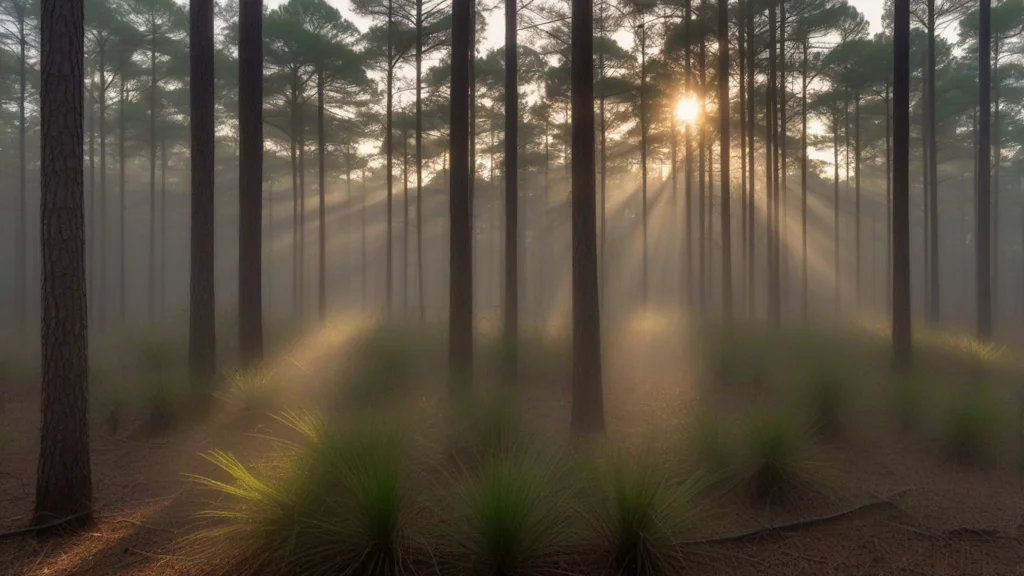
Unlike the iconic prairies and deserts that define much of Texas, the Piney Woods belongs to the Southern Forest region that dominates the American Southeast. If you stood blindfolded in the Sam Houston National Forest, you’d never guess you were in Texas—the loblolly pines, humid air, and chorus of frogs could place you anywhere from Georgia to East Louisiana.
The ecoregion is bounded by:
Within the piney woods texas, unique experiences await every visitor, from hiking trails to wildlife viewing opportunities.
- North: Red River and Oklahoma border
- East: Louisiana and Arkansas state lines
- South: Gulf Prairies and Marshes ecoregion
- West: Post Oak Savannah and Blackland Prairie
KEY TAKEAWAY: The Piney Woods contains the greatest plant and animal diversity of any Texas ecoregion. The Big Thicket region alone hosts species from five different biotic provinces—southeastern swamps, eastern forests, central plains, southwestern deserts, and coastal marshes—all within a 100-mile radius.
The ecosystems found in the piney woods texas are rich and varied, supporting many species that thrive in this lush environment.
The name “Piney Woods” comes from the four pine species that dominate the landscape: longleaf, shortleaf, loblolly, and slash pine. However, this simple name belies the region’s complexity. Within the Piney Woods, you’ll find distinct habitats ranging from upland pine forests to cypress-tupelo swamps, from tallgrass wetlands to ancient hardwood bottomlands.
Geography and Climate of the Piney Woods
Landforms and Terrain
The Piney Woods occupies the western edge of the Gulf Coastal Plain, characterized by gently rolling hills, broad river valleys, and extensive floodplains. Elevations range from near sea level in the southern portions to about 500 feet in the northern uplands near the Red River.
Unlike the dramatically sculpted landscapes of West Texas, the Piney Woods terrain is subtle. You’ll notice gradual transitions from upland pine ridges down to hardwood slopes, then into bottomland forests and swamps along rivers and creeks. These elevation changes—sometimes just 50 to 100 feet—create dramatically different habitats.
Major landform features include:
- Pine Uplands: Well-drained ridges dominated by pine forests
- Hardwood Slopes: Mixed forests on hillsides and transitions
- Bottomland Forests: Rich hardwood forests in river floodplains
- Wetlands and Bogs: Acidic seeps, baygalls, and cypress swamps
- Blackwater Streams: Slow-moving, tea-colored waterways
Soil Types
The soils of the Piney Woods are predominantly acidic and sandy in the uplands, transitioning to heavy clays in the bottomlands. This soil variation drives much of the habitat diversity.
Upland Soils: Sandy, well-drained, nutrient-poor soils support pine forests. These acidic conditions are crucial for longleaf pine ecosystems and the diverse understory plants adapted to them.
Exploring the piney woods texas offers a glimpse into some of the most stunning landscapes in Texas.
Bottomland Soils: Heavy alluvial clays deposited by flooding rivers create the rich bottomland hardwood forests. These soils hold water and nutrients, supporting massive oaks, tupelos, and other moisture-loving trees.
Wetland Soils: Saturated, acidic organic soils in bogs and seeps support specialized plant communities, including carnivorous sundews and pitcher plants that evolved to capture insects in these nutrient-poor conditions.
Discovering the Beauty of Piney Woods Texas
Climate Patterns
The Piney Woods has a humid subtropical climate—the wettest conditions in Texas. Annual rainfall ranges from 40 inches in the western portions to 56 inches near the Louisiana border, making this region feel more like the Deep South than the Lone Star State.
| Climate Factor | Range |
|---|---|
| Annual Rainfall | 40-56 inches |
| Summer High Temps | 90-95°F |
| Winter Low Temps | 35-40°F |
| Growing Season | 230-270 days |
| Humidity | High year-round |
Summers are hot and humid, with afternoon thunderstorms common from May through September. Winters are mild but can include occasional ice storms that significantly impact the forest. The long growing season supports the lush vegetation that defines the region.
PRO TIP: The best time to visit the Piney Woods is spring (March-May) for wildflowers and migrating birds, or fall (October-November) for comfortable temperatures and fall color. Summer brings intense heat and humidity, plus mosquitoes.
Hydrology
Water defines the Piney Woods. The region is drained by several major river systems, all flowing southeast toward the Gulf of Mexico:
- Sabine River: Forms much of the Texas-Louisiana border
- Neches River: Flows through the heart of the Big Thicket
- Trinity River: Western boundary of the ecoregion
- Angelina River: Major Neches tributary
- Red River: Northern boundary
These rivers and their countless tributaries create the bottomland habitats that harbor much of the region’s biodiversity. The slow-moving blackwater streams, stained dark by tannic acids from decaying vegetation, are particularly distinctive.
The Carrizo-Wilcox Aquifer underlies much of the Piney Woods, providing groundwater for communities and sustaining the seeps and springs that support unique wetland communities.
Native Plants of the Piney Woods
The Piney Woods supports over 1,000 native plant species—more than any other Texas ecoregion. This botanical diversity results from the region’s position at the crossroads of multiple plant communities and its variety of habitats.
Dominant Tree Species
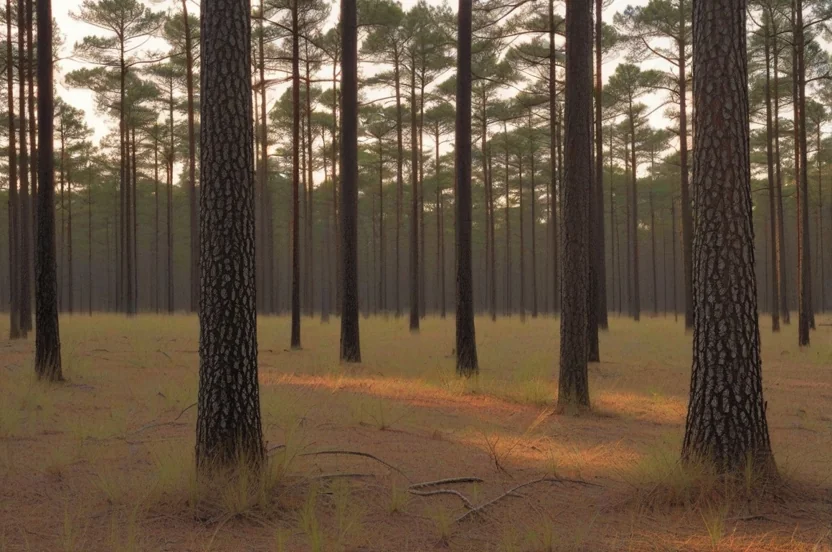
The Longleaf Pine (Pinus palustris) is the iconic tree of the Piney Woods, though it’s now rare. Before European settlement, longleaf pine savannas covered an estimated 90 million acres across the South—today, less than 3% remains. In Texas, you’ll find longleaf pine primarily in protected areas like the Big Thicket.
Longleaf pines are magnificent trees, reaching 100+ feet tall with distinctive long needles (12-18 inches) in bundles of three. Young longleaf pines spend several years in a “grass stage,” looking like a tuft of grass while developing a deep taproot.
The Loblolly Pine (Pinus taeda) is now the most common pine in East Texas, thriving in disturbed areas and on commercial timber plantations. Faster-growing than longleaf, loblolly pines dominate much of the modern Piney Woods landscape.
Shortleaf Pine (Pinus echinata) grows throughout the Piney Woods, particularly in upland areas. It’s the most widely distributed southern pine and can tolerate drier conditions than loblolly.
Slash Pine (Pinus elliottii) reaches its western limit in the Piney Woods, found primarily in the southeastern portions near the Louisiana border.
Hardwood Trees
The Piney Woods is more than pines. Hardwood forests—particularly in bottomlands and on slopes—add tremendous diversity.
Notable hardwoods include:
- Southern Magnolia (Magnolia grandiflora) – Evergreen with iconic white flowers
- American Beech (Fagus grandifolia) – Smooth gray bark, limited range in Texas
- Water Oak (Quercus nigra) – Common bottomland oak
- Sweetgum (Liquidambar styraciflua) – Star-shaped leaves, spiky fruit balls
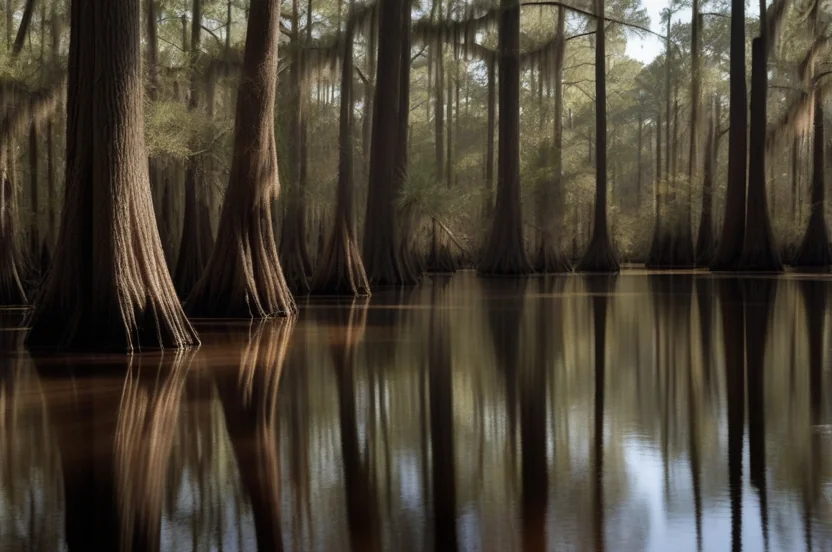
- Bald Cypress (Taxodium distichum) – Iconic swamp tree with “knees”
- Water Tupelo (Nyssa aquatica) – Swamp species with swollen trunk base
- American Holly (Ilex opaca) – Evergreen with red berries
The wetlands and forests of the piney woods texas are crucial for maintaining biodiversity in the region.
KEY TAKEAWAY: The Big Thicket contains 85 tree species—more than any other area of comparable size in North America. This diversity occurs because species from eastern deciduous forests, southern pinelands, and southwestern regions all reach their range limits here.
Understory Plants
The Piney Woods understory is remarkably diverse, particularly where fire maintains open conditions.
- American Beautyberry (Callicarpa americana) – Brilliant purple berry clusters
- Flowering Dogwood (Cornus florida) – White spring blooms
- Eastern Redbud (Cercis canadensis) – Pink spring blooms
- Dwarf Palmetto (Sabal minor) – Fan palm of bottomlands
- Yaupon Holly (Ilex vomitoria) – Evergreen shrub, source of caffeine
Wildflowers and Carnivorous Plants
Spring transforms the Piney Woods with wildflower displays. Look for:
- Atamasco Lily (Zephyranthes atamasca) – White lily of moist woods
- Spider Lily (Hymenocallis) – Elegant white flowers near water
- Cardinal Flower (Lobelia cardinalis) – Brilliant red spikes
- Wild Azalea (Rhododendron canescens) – Pink fragrant blooms
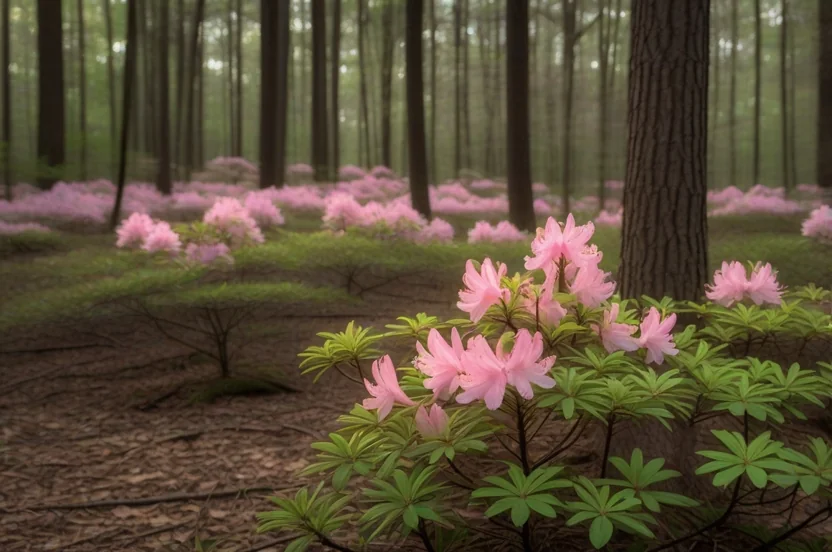
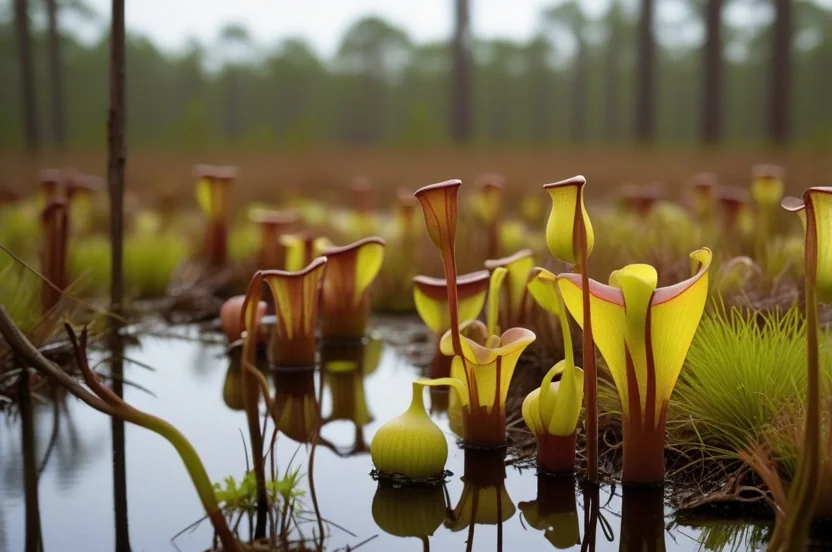
Perhaps most remarkable are the carnivorous plants found in acidic bogs and seeps:
- Sundews (Drosera spp.) – Sticky leaves trap insects
- Pitcher Plants (Sarracenia alata) – Tube-shaped leaves drown prey
- Butterworts (Pinguicula spp.) – Sticky rosette leaves
These plants evolved insect-eating strategies to survive in the nutrient-poor, acidic soils of Piney Woods wetlands.
Wildlife of the Piney Woods
The Piney Woods supports the highest wildlife diversity of any Texas ecoregion. Its mixture of forests, wetlands, and transitional habitats provides niches for species from multiple biotic communities.
Mammals
The American Black Bear (Ursus americanus) is returning to East Texas after being extirpated in the early 1900s. Bears from Louisiana populations have been expanding westward, and sightings now occur regularly in the eastern Piney Woods. While still uncommon, the bear’s return represents a significant conservation success.
Other notable mammals:
- White-tailed Deer (Odocoileus virginianus) – Abundant throughout
- Nine-banded Armadillo (Dasypus novemcinctus) – Common, often seen as roadkill
- Eastern Gray Squirrel (Sciurus carolinensis) – Common in hardwoods
- Fox Squirrel (Sciurus niger) – Larger, found in pine-hardwood mix
- Bobcat (Lynx rufus) – Secretive predator
- River Otter (Lontra canadensis) – Recovering along waterways
- Beaver (Castor canadensis) – Common, shapes wetland habitats
Birds
The Piney Woods is a birding hotspot, particularly during spring migration when millions of neotropical migrants pass through.
The Red-cockaded Woodpecker (Leuconotopicus borealis) is the flagship species of the longleaf pine ecosystem. Federally endangered, this small woodpecker requires old-growth pine forests with trees old enough to have heart rot—a condition that allows the birds to excavate nest cavities. In Texas, populations survive in national forests and protected areas.
Red-cockaded Woodpeckers are cooperative breeders, living in family groups called clans. Look for trees with distinctive resin wells—the birds create these wounds so sticky sap flows around the nest cavity, deterring rat snakes.
As you explore the piney woods texas, take time to appreciate the diverse plant life that thrives here.
Other notable birds:
- Pileated Woodpecker (Dryocopus pileatus) – Large, crow-sized woodpecker
- Brown-headed Nuthatch (Sitta pusilla) – Pine specialist
- Pine Warbler (Setophaga pinus) – Common in pine forests
- Prothonotary Warbler (Protonotaria citrea) – Golden swamp warbler
- Wood Duck (Aix sponsa) – Colorful duck of wooded wetlands
- Barred Owl (Strix varia) – “Who cooks for you” call
- Wild Turkey (Meleagris gallopavo) – Common in pine-hardwood forests
WHERE TO SEE: The best birding in the Piney Woods is during spring migration (April-May). Visit Boy Scout Woods and High Island on the upper Texas coast, or explore the Davy Crockett National Forest for resident species like the Red-cockaded Woodpecker.
Reptiles and Amphibians
The warm, humid Piney Woods supports exceptional reptile and amphibian diversity.
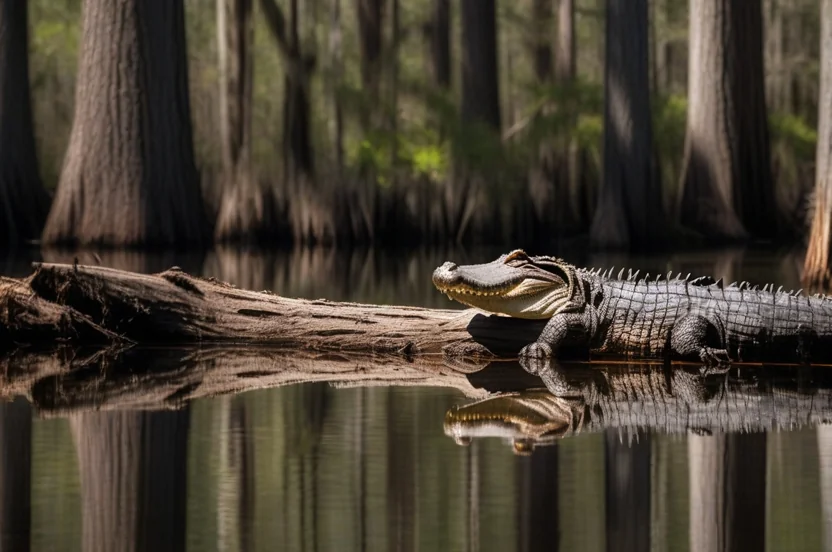
The American Alligator (Alligator mississippiensis) is common in Piney Woods waterways, from major rivers to small ponds. Once endangered, alligator populations have recovered dramatically since the 1960s. You’ll often see them basking on logs or banks, particularly in spring.
The Piney Woods hosts more snake species than any other Texas ecoregion:
- Cottonmouth (Agkistrodon piscivorus) – Venomous, common near water
- Copperhead (Agkistrodon contortrix) – Venomous, forest floors
- Timber Rattlesnake (Crotalus horridus) – Venomous, rare
- Texas Coral Snake (Micrurus tener) – Venomous, secretive
- Eastern Rat Snake (Pantherophis alleghaniensis) – Large, common, beneficial
- Rough Green Snake (Opheodrys aestivus) – Bright green, arboreal
The Louisiana Pine Snake (Pituophis ruthveni) is one of North America’s rarest snakes, found only in longleaf pine savannas of East Texas and western Louisiana. This large, non-venomous snake depends on pocket gopher burrows for shelter and is threatened by habitat loss.
The humid climate supports diverse frogs and salamanders:
- Green Treefrog (Hyla cinerea) – Bright green, loud call
- Southern Leopard Frog (Lithobates sphenocephalus) – Spotted, wetland species
- American Bullfrog (Lithobates catesbeianus) – Large, deep call
- Marbled Salamander (Ambystoma opacum) – Black with white bands
Best Places to Explore the Piney Woods
The Piney Woods offers outstanding natural areas, from national preserves to state parks to wildlife management areas.
Big Thicket National Preserve
Location: Southeast Texas (Beaumont area)
Size: 113,000 acres across multiple units
Best For: Biodiversity, unique habitats, hiking
Big Thicket National Preserve protects the “Biological Crossroads of North America.” This UNESCO Biosphere Reserve contains an astonishing variety of habitats: longleaf pine uplands, cypress sloughs, baygall wetlands, and mixed forests.
The preserve’s scattered units protect different habitat types along the Neches River corridor. Don’t expect a single contiguous park—Big Thicket is a collection of interconnected units.
Highlights:
- Kirby Nature Trail – Diverse loop through multiple habitats
- Pitcher Plant Trail – Accessible boardwalk to carnivorous plant bog
- Turkey Creek Trail – 15-mile trek through corridor unit
- Village Creek Paddling Trail – Canoe/kayak through blackwater swamp
Visitor Info: Free entry. Visitor center in Kountze open daily.
PRO TIP: Start at the Big Thicket Visitor Center for maps and current conditions. Trails can be muddy year-round, and summer brings extreme heat, humidity, and mosquitoes.
Sam Houston National Forest
Location: North of Houston (Huntsville area)
Size: 163,000 acres
Best For: Hiking, backpacking, Red-cockaded Woodpecker
Sam Houston National Forest offers extensive recreational opportunities within easy reach of Houston. The Lone Star Hiking Trail, Texas’s longest continuous footpath, winds 129 miles through the forest.
Highlights:
- Lone Star Hiking Trail – Texas’s premier backpacking trail
- Double Lake Recreation Area – Swimming, camping, fishing
- Red-cockaded Woodpecker viewing areas (inquire at ranger station)
- Stubblefield Lake Recreation Area – Accessible trails
Visitor Info: Day use areas may have entrance fees. Multiple campgrounds available.
Davy Crockett National Forest
Location: East of Houston (Crockett/Ratcliff area)
Size: 160,000 acres
Best For: Hiking, mountain biking, wildlife
Named for the famous frontiersman, Davy Crockett National Forest offers solitude and excellent wildlife habitat. The forest supports a significant Red-cockaded Woodpecker population.
Highlights:
- Ratcliff Lake Recreation Area – Historic CCC-built facilities
- Four C Hiking Trail – 20-mile trail from Ratcliff to Neches River
- Piney Creek Horse Trail – Equestrian trails
- Excellent deer hunting in fall
Visitor Info: Ratcliff Lake has entrance fee. Multiple campgrounds.
Caddo Lake State Park
Location: Uncertain, TX (northeast Texas near Louisiana border)
Size: 484 acres (park); Caddo Lake is 26,000+ acres
Best For: Paddling, cypress swamps, Spanish moss
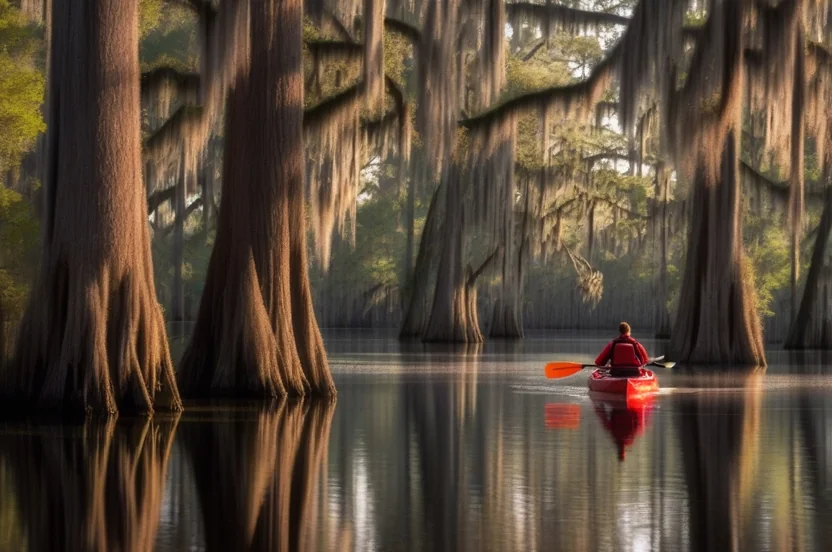
Caddo Lake is Texas’s only natural lake, created by the Great Raft—a massive logjam on the Red River. The lake’s 26,000+ acres of cypress-lined channels and bayous create a haunting, otherworldly landscape.
Highlights:
- Paddling through cypress swamps
- Largest cypress forest in Texas
- Historic Civilian Conservation Corps cabins
- Outstanding birding and fishing
Visitor Info: $4 daily entrance. Canoe/kayak rentals available.
WARNING: Caddo Lake’s maze-like channels are easy to get lost in. Hire a local guide for your first visit, or download detailed GPS maps. Alligators are common—give them space.
Martin Dies Jr. State Park
Location: Jasper (between Woodville and Jasper)
Size: 705 acres on B.A. Steinhagen Lake
Best For: Camping, paddling, accessible trails
Martin Dies Jr. State Park provides excellent Piney Woods access with well-developed facilities. The park occupies a peninsula in B.A. Steinhagen Lake.
Highlights:
- Scenic sloughs and channels for kayaking
- Excellent birding, especially warblers in spring
- Island camping (paddle-in sites)
- Wildlife interpretive center
Known for its natural beauty, the piney woods texas is a haven for photographers and nature lovers alike.
Visitor Info: $5 daily entrance. Reservations recommended for camping.
Conservation and Threats
The Piney Woods faces significant conservation challenges. Understanding these threats helps visitors appreciate why protecting remaining habitats matters.
Current Threats
Timber Industry Impacts: Commercial forestry has transformed the Piney Woods. Most original forests were logged by the early 1900s, and much of the land is now managed for fast-growing loblolly pine plantations. While these tree farms provide some wildlife habitat, they lack the structural diversity and species richness of natural forests.
The conversion of natural pine-hardwood forests to monoculture pine plantations has particularly impacted longleaf pine ecosystems (reduced by 97%), Red-cockaded Woodpecker habitat, and native understory plant communities.
Fire Suppression: Fire is natural and necessary in the Piney Woods. Before European settlement, lightning fires and Indigenous burning maintained open pine savannas with diverse understories. Fire suppression has allowed invasive brush to overtake once-open pine forests, degrading habitat for fire-dependent species.
Habitat Fragmentation: Roads, development, and forest management practices fragment the Piney Woods landscape. This fragmentation isolates wildlife populations, prevents natural movements, increases edge effects, and reduces genetic diversity.
Invasive Species: Feral Hogs (Sus scrofa) cause enormous damage, rooting up understory plants, destroying nests, and competing with native wildlife. Chinese Tallow (Triadica sebifera) is transforming coastal prairies and forest edges.
Conservation Efforts
Despite challenges, significant conservation efforts are underway:
- Longleaf Pine Restoration: The Forest Service, Texas Parks & Wildlife, and conservation groups are restoring longleaf pine ecosystems across East Texas, including replanting longleaf pines and reintroducing prescribed fire.
- Red-cockaded Woodpecker Recovery: Intensive management has stabilized and increased Texas populations through artificial nest cavities, translocation, and habitat management.
- Big Thicket Protection: The National Park Service continues to acquire inholdings and expand Big Thicket National Preserve.
- Private Lands Conservation: Organizations like The Nature Conservancy Texas work with private landowners to protect key habitats.
How You Can Help
- Visit responsibly: Stay on trails, pack out trash, respect wildlife
- Support conservation groups: The Nature Conservancy Texas, Texas Land Conservancy, Big Thicket Association
- Choose certified wood products: Look for sustainable forestry certifications
- Report wildlife sightings: Submit observations to iNaturalist to support research
- Advocate for prescribed fire: Support agencies’ ability to use fire as a management tool
KEY TAKEAWAY: The Piney Woods’ greatest conservation need is large-scale restoration of longleaf pine ecosystems and the return of prescribed fire. You can support this by visiting national forests and preserves—your entrance fees and economic impact help justify continued conservation investment.
Best Times to Visit
The Piney Woods rewards visitors year-round, but timing your visit can enhance your experience.
| Season | Highlights | Considerations |
|---|---|---|
| Spring (March-May) | Wildflowers, bird migration, mild weather, flowering dogwoods | Rain possible, ticks and mosquitoes emerging |
| Summer (June-August) | Longest days, lush vegetation | Extreme heat (95°F+), high humidity, mosquitoes |
| Fall (September-November) | Fall color, comfortable temperatures, deer hunting season | Hurricane risk in September-October |
| Winter (December-February) | Mild weather, fewer crowds, waterfowl | Some trees bare, occasional ice storms |
Best Overall: Late March through May offers the optimal combination of wildflowers, migrating birds, comfortable temperatures, and longer days.
For Birding: April-May for spring migration; December-February for waterfowl.
For Wildflowers: Late March through April for peak blooms.
For Fall Color: November for sweetgum, cypress, and hardwood color.
Frequently Asked Questions
What counties are in the Piney Woods?
The Piney Woods includes all or part of 43 East Texas counties. Major counties include: Angelina, Cherokee, Hardin, Harrison, Houston, Jasper, Nacogdoches, Newton, Panola, Polk, Sabine, San Augustine, Shelby, Trinity, Tyler, and Walker. The region extends from the Red River south to the Gulf Coastal Plains.
What is the Piney Woods known for?
The Piney Woods is known for its pine forests, biodiversity, the Big Thicket National Preserve, and its unusually humid climate for Texas. It’s the only Texas ecoregion with extensive pine forests and supports more plant and animal species than any other region in the state.
What wildlife can you see in the Piney Woods?
You can see American alligators, white-tailed deer, armadillos, and returning black bears. Bird highlights include Red-cockaded Woodpeckers (endangered), Pileated Woodpeckers, and migrating warblers. The region also supports diverse snakes, turtles, frogs, and salamanders.
What is the best time to visit the Piney Woods?
Spring (March-May) is best for wildflowers, bird migration, and comfortable weather. Fall (October-November) offers pleasant temperatures and fall foliage. Summer is very hot and humid with abundant mosquitoes. Winter is mild but some facilities may be closed.
Are there endangered species in the Piney Woods?
Yes. The Red-cockaded Woodpecker is federally endangered, requiring old-growth pine forests. The Louisiana Pine Snake is threatened. The Louisiana Black Bear (a subspecies expanding into Texas) is federally threatened. Several plant species found in Big Thicket bogs are also rare or endangered.
Where can I hike in the Piney Woods?
Each visit to the piney woods texas can reveal new discoveries, making it a favorite destination for many.
Top hiking destinations include: Lone Star Hiking Trail in Sam Houston National Forest (129 miles), Kirby Nature Trail in Big Thicket, Four C Trail in Davy Crockett National Forest, and trails at Martin Dies Jr. State Park. The Big Thicket offers shorter nature trails perfect for day hikes.
How is the Piney Woods different from the Post Oak Savannah?
The Piney Woods is wetter (40-56 inches of rain vs. 35-45 inches), has pine-dominated forests rather than scattered oaks, and supports different wildlife communities. The Post Oak Savannah is a transitional zone between the Piney Woods and prairies to the west, with open oak woodlands rather than dense forests.
Explore the Piney Woods
The Piney Woods offers a Texas experience unlike any other—humid forests, swampy bayous, and biodiversity that rivals anywhere in the state. Whether you’re paddling through cypress swamps at Caddo Lake, searching for rare orchids in the Big Thicket, or backpacking the Lone Star Trail, this ecoregion rewards curious visitors with discoveries at every turn.
Ready to explore? Start with Big Thicket National Preserve for the most accessible introduction to Piney Woods diversity. Take the Kirby Nature Trail for a sampler of habitats, or paddle the Turkey Creek corridor for a true wilderness experience.
And remember: by visiting these public lands and supporting conservation efforts, you help ensure East Texas forests remain wild for future generations to explore.
Related Guides:
- Texas Ecoregions: Complete Guide to 10 Ecological Regions
- Native Texas Plants (coming soon)
- Texas Wildlife Overview (coming soon)
- Post Oak Savannah Guide (coming soon)