
Texas Wildflowers: Complete Guide to When and Where to See Them
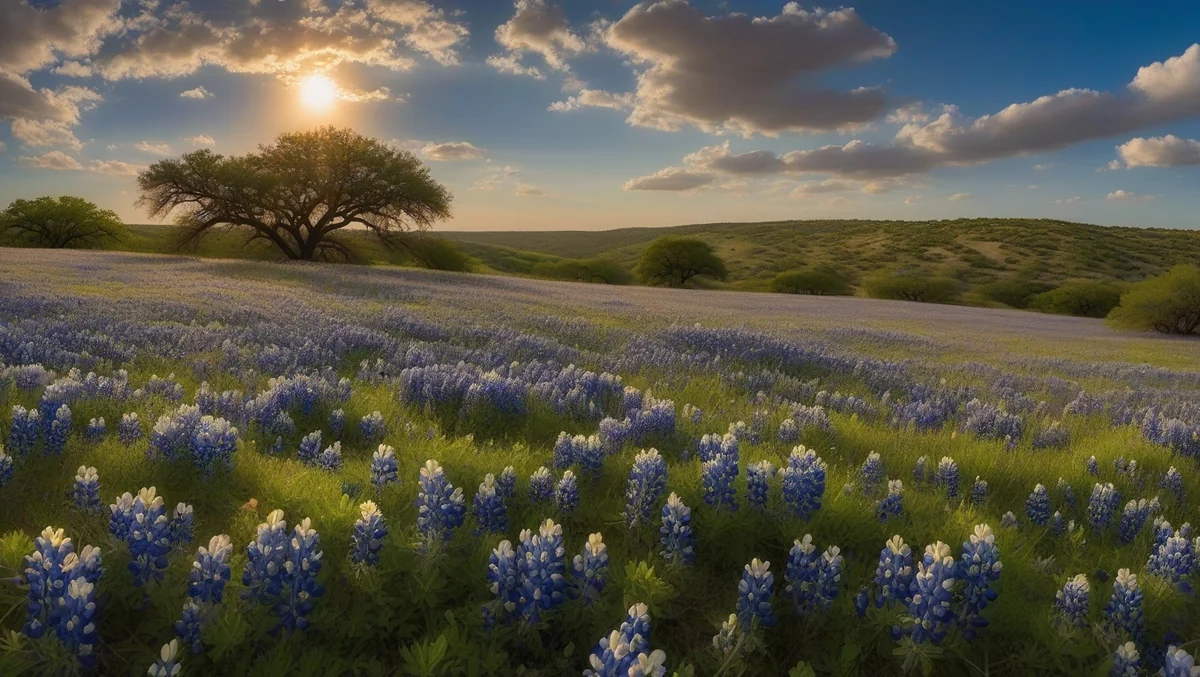
Every spring, Texas transforms into one of America’s most spectacular wildflower displays. From the iconic bluebonnet fields that draw millions of visitors to the lesser-known paintbrush prairies and coreopsis-covered roadsides, Texas wildflowers represent one of our state’s most beloved natural treasures. This seasonal explosion of color isn’t random—it follows predictable patterns across our diverse ecoregions, and knowing these patterns helps you witness the peak blooms.
Whether you’re planning a road trip through the Hill Country, looking for the best bluebonnet fields near Austin or Dallas, or simply want to understand when wildflowers bloom in your region, this guide covers everything you need to know: timing by region, top viewing locations, key species to look for, and tips for the best wildflower experience.

When Is Texas Wildflower Season?
Texas wildflower season typically runs from late February through mid-May, with peak blooms varying significantly by region. The season follows a predictable south-to-north progression as temperatures warm, starting along the Rio Grande Valley and moving through Central Texas before reaching the Panhandle.
| Region | Early Blooms | Peak Season | Late Blooms |
|---|---|---|---|
| South Texas | Late February | Mid-March to early April | Late April |
| Hill Country / Central Texas | Mid-March | Late March to mid-April | Early May |
| North Texas / DFW | Late March | Mid-April to early May | Mid-May |
| East Texas | Mid-March | Early April to late April | Mid-May |
| West Texas / Trans-Pecos | March (variable) | April (rainfall dependent) | May-June |
| Panhandle / High Plains | Mid-April | Late April to mid-May | Late May |
Several factors affect each year’s wildflower display:
- Fall and winter rainfall: Seeds need moisture to germinate in autumn. Years with good fall rains typically produce spectacular spring blooms.
- Winter temperatures: Mild winters allow earlier germination; hard freezes can damage seedlings.
- Spring weather: Cool, moist springs extend bloom times; hot, dry conditions shorten the display.
- Timing of last freeze: Late freezes can damage flower buds and delay peak blooms.
PRO TIP: The best wildflower years follow a pattern: good fall rains (October-November), a mild winter with occasional moisture, and a slow warm-up in spring. Check the Lady Bird Johnson Wildflower Center’s bloom reports at wildflower.org for real-time conditions.
Best Places to See Texas Wildflowers
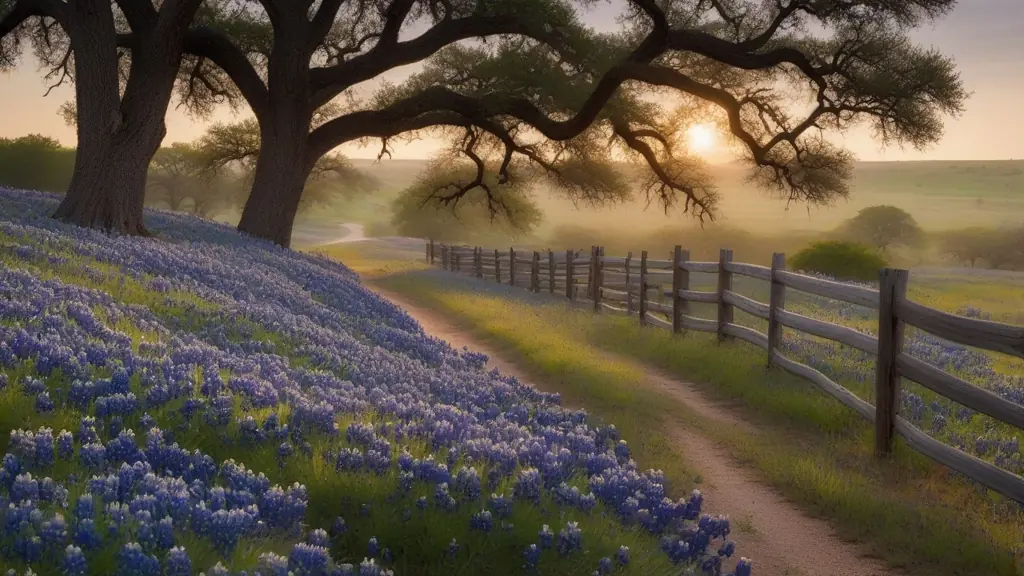
Texas offers countless wildflower viewing opportunities, from roadsides to state parks to private ranches. Here are the best destinations by region:
Hill Country / Edwards Plateau
The Edwards Plateau region is Texas’s wildflower heartland. The combination of limestone soils, rolling terrain, and moderate rainfall creates ideal conditions for bluebonnets, Indian paintbrush, and dozens of other species.
Top Locations:
- Willow City Loop (north of Fredericksburg) – A legendary 13-mile scenic drive famous for dense bluebonnet fields along a winding country road. Peak: late March to mid-April.
- Highway 290 Corridor (Fredericksburg to Johnson City) – Multiple roadside pullouts with excellent wildflower displays. Watch for private property.
- Lyndon B. Johnson State Park (Stonewall) – Managed wildflower areas with reliable blooms. The park plants additional seeds for consistent displays.
- Enchanted Rock State Natural Area – Granite outcrops surrounded by wildflower meadows. Unique species adapted to thin, rocky soils.
- Pedernales Falls State Park – River bottomlands and upland prairies with diverse wildflowers and hiking trails.
Central Texas / Austin Area
Top Locations:
- Lady Bird Johnson Wildflower Center – Austin’s premier wildflower destination with curated displays and native plant gardens. Bloom updates posted weekly.
- McKinney Falls State Park – Riparian corridors and upland prairies within Austin city limits.
- Highway 71 East (Bastrop to La Grange) – Post Oak Savannah transition zone with Indian blanket and coreopsis.
- Bluebonnet Trail (Ennis area) – Official festival with mapped driving routes through farm country. Peak: mid-April.
North Texas / Dallas-Fort Worth
The Blackland Prairie and Cross Timbers regions surrounding DFW offer excellent wildflower viewing, typically peaking 2-3 weeks after Central Texas.
Top Locations:
- Ennis Bluebonnet Trail – Texas’s largest organized wildflower event with 40+ miles of mapped trails through Ellis County. Official festival in mid-April.
- Arbor Hills Nature Preserve (Plano) – Prairie restoration areas with native wildflowers.
- Cedar Ridge Preserve (Dallas) – 600 acres of native prairie and woodland with spring blooms.
- Tandy Hills Natural Area (Fort Worth) – One of the last remaining original prairies in Tarrant County.
South Texas
The South Texas Plains bloom earliest, with unique species not found elsewhere in the state.
Top Locations:
- Coastal Bend (Corpus Christi area) – Early blooms along the Gulf Coast, often starting in late February.
- Choke Canyon State Park – South Texas brush country with seasonal wildflowers.
- Highway 77 (south of Corpus Christi) – Sandy soils support evening primrose, huisache daisy, and pink evening primrose.
East Texas / Piney Woods
The Piney Woods region offers a different wildflower experience, with woodland species and roadside meadows blooming under pine canopy.
Top Locations:
- Tyler State Park – Forest wildflowers including woodland phlox and wild azalea.
- Big Thicket National Preserve – Incredible biodiversity with carnivorous plants and orchids among spring blooms.
- Highway 69 (Tyler to Lindale) – Azalea Trail with native dogwood and redbud alongside cultivated azaleas.
West Texas / Trans-Pecos
The Trans-Pecos produces spectacular blooms in good rainfall years, with desert wildflowers creating carpets across normally barren landscapes.
Top Locations:
- Big Bend National Park – Desert wildflowers bloom March through May. Bluebonnets (Big Bend variety) grow along roadsides.
- Davis Mountains – Higher elevation wildflowers including mountain sage and blackfoot daisy.
- Highway 118 (Alpine to Study Butte) – Desert marigold and Mexican hat along scenic desert highway.
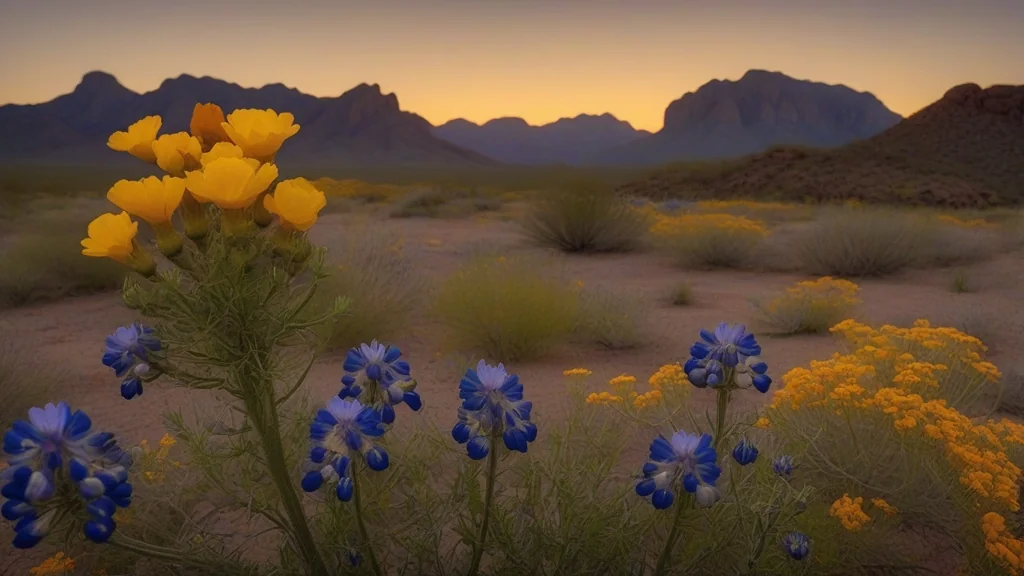
KEY TAKEAWAY: West Texas wildflower displays are highly dependent on winter and spring rainfall. In dry years, blooms may be sparse. In exceptional years following good rains, the desert explodes with color. Monitor local conditions before planning a trip.
Texas Wildflowers to Look For
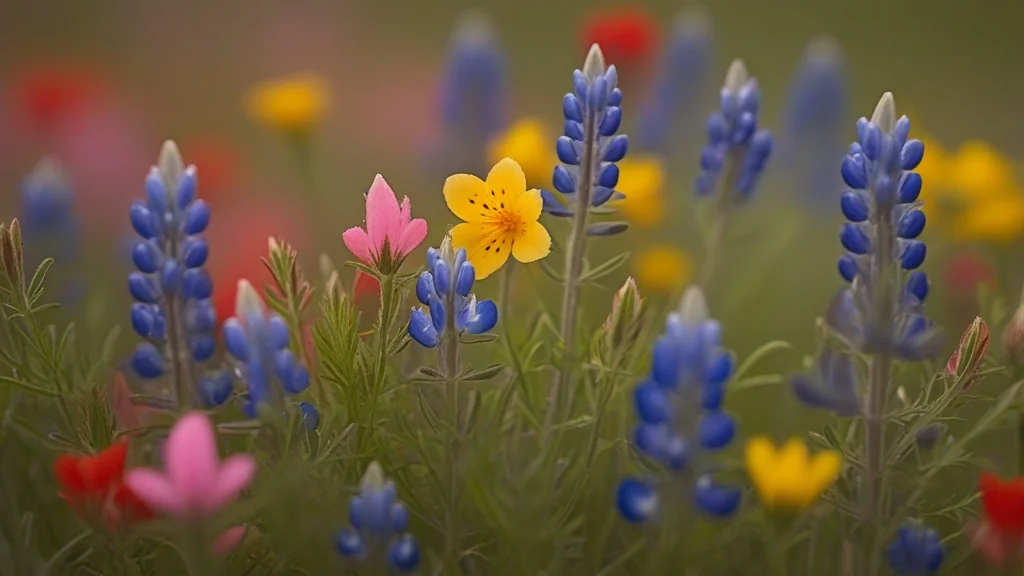
Texas hosts over 5,000 native wildflower species. Here are the most iconic species you’ll encounter during spring wildflower season:
Bluebonnets (Lupinus texensis and related species)
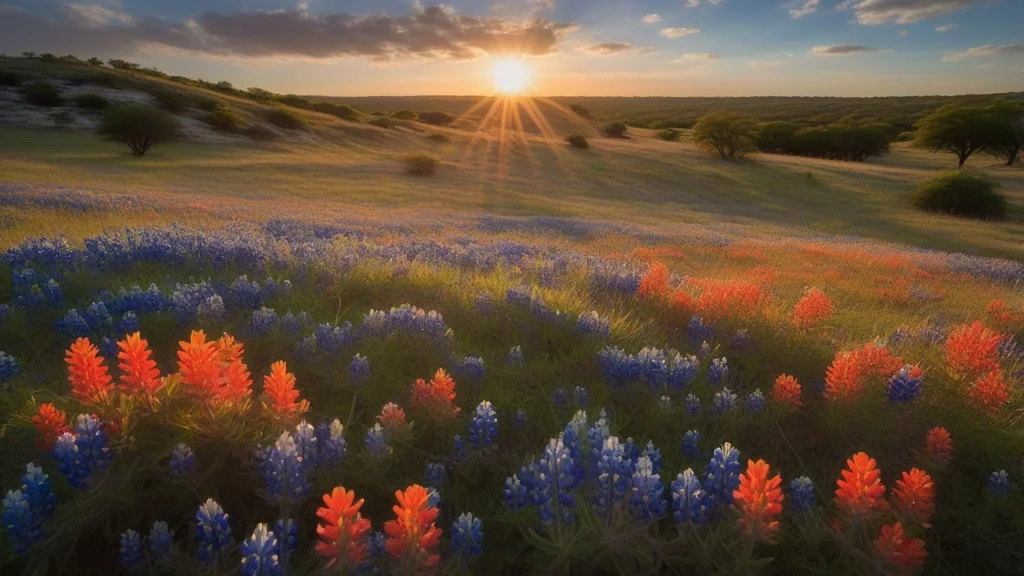
Texas’s state flower includes six species of lupine collectively known as bluebonnets. The most common is Lupinus texensis, the classic bluebonnet that carpets Central Texas. Look for deep blue flower spikes with white tips, palmately compound leaves, and a distinctive sweet fragrance. Blooms: March-April in most regions.
Indian Paintbrush (Castilleja indivisa)
The perfect complement to bluebonnets, Indian paintbrush’s brilliant red-orange bracts create stunning contrast in mixed wildflower fields. This hemiparasitic plant connects to grass roots for nutrients. Found throughout Texas. Blooms: March-May.
Pink Evening Primrose (Oenothera speciosa)
Delicate pink to white bowl-shaped flowers that open in late afternoon and evening. Extremely common along roadsides and in disturbed areas. Spreads aggressively via underground runners. Blooms: April-June.
Indian Blanket / Firewheel (Gaillardia pulchella)
One of Texas’s most heat and drought-tolerant wildflowers, with distinctive red and yellow daisy-like flowers. Continues blooming through summer when most other wildflowers have finished. Blooms: May-September.
Texas Yellow Star / Lindheimer’s Daisy (Lindheimera texana)
Bright yellow daisy found throughout Central Texas, often blooming alongside bluebonnets. Endemic to Texas. Blooms: March-May.
Winecup (Callirhoe involucrata)
Deep magenta cup-shaped flowers on trailing stems. Found in prairies and open areas across Texas. Blooms: March-June.
Black-Eyed Susan (Rudbeckia hirta)
Classic yellow daisy with dark brown center cone. Extends wildflower season into summer. Common in East and Central Texas. Blooms: May-September.
Phlox (Phlox drummondii)
Annual phlox native to Texas, with flowers ranging from pink to red to purple to white. Often found in sandy soils. Blooms: February-May.
For detailed plant identification and native plant restoration guidance, see our comprehensive Texas Native Plants guide.
Tips for Wildflower Viewing
Best Time of Day
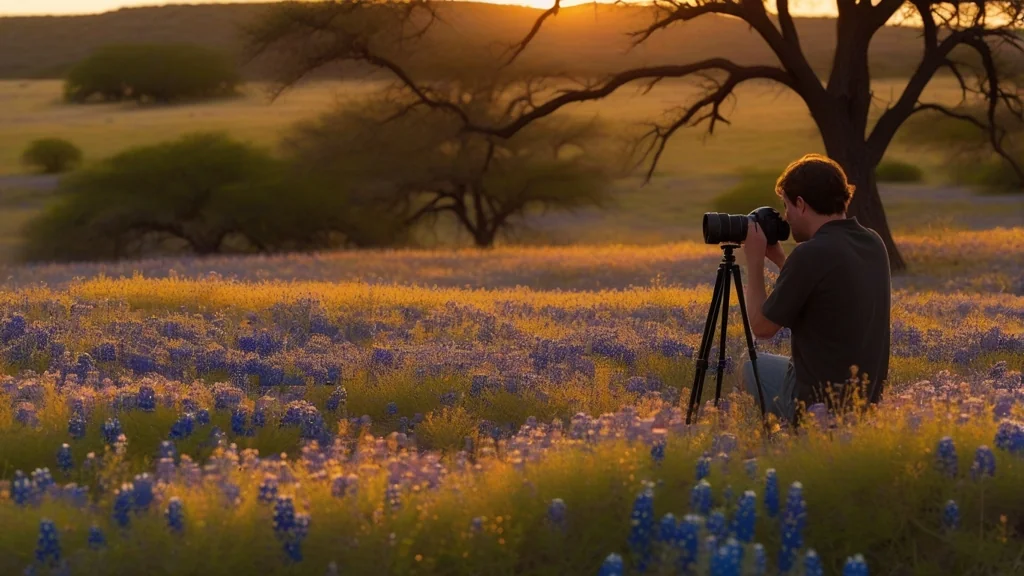
- Golden hour (early morning or late afternoon) provides the best photography light
- Overcast days reduce harsh shadows and make colors more vibrant
- Avoid midday when flowers may close and harsh light washes out colors
- Weekday mornings have fewer crowds at popular locations
Photography Tips
- Get low—shoot at flower level for dramatic perspectives
- Use a wide aperture (f/2.8-f/4) for creamy bokeh backgrounds
- Include context like fences, barns, or hills for sense of place
- Focus on single flowers for macro shots, wide fields for landscapes
- Consider a polarizing filter to reduce glare and enhance color
Etiquette and Safety
- Stay on roads and trails—walking through wildflower fields tramples plants and kills seeds for next year
- Never pick wildflowers—it’s illegal on public land and prevents seed production
- Respect private property—many of the best displays are on private ranches
- Pull completely off the road when stopping for photos
- Watch for snakes—they become active in warm spring weather
- Check for fire ants before sitting or kneeling
WARNING: Never place children, pets, or yourself in wildflower fields for photos. Beyond damaging plants, this practice is dangerous—fields often contain hidden fire ant mounds, venomous snakes, and livestock waste. Use long lenses to photograph fields from the roadside.
Why Texas Has Such Amazing Wildflowers
Texas’s exceptional wildflower displays result from a unique combination of factors:
- Geographic diversity: Texas spans 10 distinct ecoregions, from humid pine forests to Chihuahuan Desert
- Botanical crossroads: Eastern and Western US flora meet in Texas, creating exceptional species diversity
- Soil variety: Limestone, sandy, clay, and granite soils each support different wildflower communities
- Mild winters: Seeds germinate in fall and grow through winter, building root systems before spring bloom
- TxDOT wildflower program: Since the 1930s, the state has seeded roadsides with native wildflowers
- Lady Bird Johnson’s legacy: Her Highway Beautification Act and conservation work preserved natural roadsides
Texas Wildflower Festivals and Events
Several communities celebrate wildflower season with organized events:
- Ennis Bluebonnet Trails Festival (April) – Texas’s official bluebonnet trail with 40+ miles of mapped driving routes
- Chappell Hill Bluebonnet Festival (April) – Historic town in Washington County with arts, food, and wildflower fields
- Burnet Bluebonnet Festival (April) – Highland Lakes area celebration in the “Bluebonnet Capital of Texas”
- Independence Wildflower Celebration (April) – Washington-on-the-Brazos area with Texas history connections
- Fredericksburg Wildflower Celebration (April) – Hill Country event with wine tasting and wildflower tours
Frequently Asked Questions
When is peak bluebonnet season in Texas?
Peak bluebonnet season typically occurs from late March through mid-April in most of Texas. South Texas blooms first (late February to mid-March), followed by the Hill Country (late March to mid-April), and finally North Texas (mid-April to early May). Check current bloom reports before traveling.
Where is the best place to see bluebonnets in Texas?
The Texas Hill Country offers the most reliable and spectacular bluebonnet displays. The Willow City Loop near Fredericksburg, Highway 290 corridor, and areas around Marble Falls and Burnet consistently produce excellent blooms. The Ennis Bluebonnet Trail near Dallas is another top destination.
Is it illegal to pick bluebonnets in Texas?
While there’s no specific law against picking bluebonnets, it is illegal to pick any wildflowers on state or federal land, highway right-of-ways, or private property without permission. Beyond legality, picking prevents seed production and damages future blooms. Please enjoy wildflowers with your eyes and camera only.
Can I sit or walk in wildflower fields for photos?
No. Walking or sitting in wildflower fields tramples plants, compacts soil, and kills seeds for future years. It’s also potentially dangerous due to fire ants, snakes, and livestock waste. Photograph from roadsides or designated trails using longer lenses to capture intimate shots.
How can I check current wildflower conditions?
The Lady Bird Johnson Wildflower Center (wildflower.org) posts regular bloom reports during spring. Texas Parks and Wildlife also shares updates on social media. Local tourism boards in popular wildflower areas (Fredericksburg, Ennis, Burnet) typically post current conditions during peak season.
What makes some years better than others for wildflowers?
Wildflower abundance depends on rainfall timing more than total amount. Good fall rains (October-November) trigger seed germination. A mild winter allows seedling growth. Cool, moist spring weather extends blooms. Drought years or late freezes can significantly reduce displays.
Can I grow wildflowers in my yard?
Yes! Plant seeds in fall (September-November) for spring blooms. Choose species native to your ecoregion for best results. Prepare soil by removing existing vegetation, scatter seeds, and press into soil contact. Don’t cover deeply—most wildflower seeds need light to germinate. See our Texas Native Plants guide for region-specific recommendations.
Plan Your Texas Wildflower Trip
Texas wildflower season offers one of nature’s most rewarding experiences, from the iconic bluebonnet fields of the Hill Country to the desert blooms of Big Bend. The key to a successful wildflower trip is timing—monitor bloom reports, plan for weekday mornings to avoid crowds, and respect the flowers and private property that make these displays possible.
Ready to explore more of Texas’s natural beauty? Learn about the diverse landscapes where these wildflowers grow in our Texas Ecoregions Guide, or discover how to attract native plants and wildlife to your property with our Native Plants by Region resource.